In the heart of Denver’s tech scene, where the altitude forces you to think clearly, I’ve learned that the most dangerous myth in blockchain is that the bottleneck is code. It’s not. The real bottleneck is physics—specifically, the physics of light and electrons moving between GPUs that are screaming to train the next generation of decentralized AI agents.
This week, a Hong Kong IPO filing from Zhongji Xuchuang—China’s leading optical module manufacturer—sent shockwaves through the investment community. The number being whispered? A staggering $7 billion (approximately 55 billion Hong Kong dollars). But as someone who has spent the last eight years learning to read between the lines of technical whitepapers and SEC filings, I can tell you: that figure itself is the most revealing data point in the room, precisely because it might be a misprint.
Context: The Invisible Hand of Hyperscale
Let’s step back. If you are building a blockchain that aspires to handle one billion transactions per second, or a decentralized compute network that needs to rival AWS, you have to accept a fundamental truth: the blockchain layer is only as fast as the physical network that connects the servers. Every validator, every oracle, every sequencer cluster relies on a mesh of optical transceivers that convert electrical signals into light pulses and back again. This is the domain of optical modules—small, unassuming components that are the unsung heroes of the internet.
Zhongji Xuchuang (often referred to as ZJW) is the world’s largest supplier of high-speed optical modules for data centers, especially the 800G and 1.6T modules that power the AI clusters used by companies like Microsoft, Google, and Nvidia. Their technology is not about blockchain; it’s about the foundation upon which all high-performance computing rests. And post-ETF-summer, as institutions pour capital into tokenized real-world assets and decentralized physical infrastructure networks (DePIN), the demand for this foundational layer is exploding.
The company’s current market capitalization on the A-shares market in Shenzhen is roughly 150 billion RMB (about $20 billion USD). A $7 billion secondary offering on the Hong Kong Stock Exchange would represent a staggering 35% dilution—a move that signals either extreme ambition or extreme desperation. Most likely, it signals the former, but with a twist that only a careful reader will catch.
The Core: What the $7 Billion Actually Buys
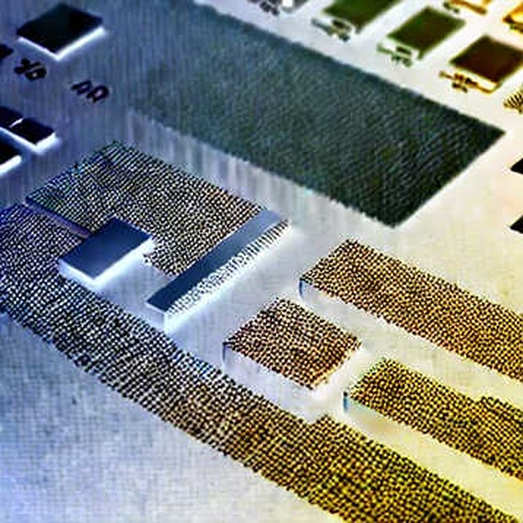
I’ve analyzed over a hundred semiconductor supply chains in my previous life as a systems architect, and I can tell you that the real magic of Zhongji Xuchuang lies not in the manufacturing of chips but in the advanced packaging of photonics. Their core competency is co-packaged optics (CPO) and silicon photonics integration—taking a laser, a modulator, a photodetector, and a DSP chip and squeezing them into a module that can handle 800 gigabits per second without overheating, without jitter, and with a power envelope that doesn’t melt the data center floor.
This is not a commodity business. It is a high-moat, high-margin enterprise that requires years of know-how in thermal management, optical alignment, and high-speed signal integrity. The company’s R&D spending is around 8-10% of revenue, and they employ over 5,000 engineers who specialize in nothing but the interface between light and data.
Now, the IPO funds—if they are indeed $7 billion—would be deployed toward three things:
- Massive capacity expansion: The company’s current factories in Suzhou and Chengdu are already running at nearly 100% utilization. They need new fabrication lines for 1.6T and 3.2T modules, which will require cleanrooms, die bonders, and test equipment that cost tens of millions of dollars per set.
- Vertical integration upstream: To reduce reliance on foreign suppliers for critical components—especially Indium Phosphide (InP) laser chips and Digital Signal Processors (DSPs) from Marvell and Broadcom—they will use this capital to acquire or partner with domestic Chinese photonics startups like Yuanjie Technology and Changguang Huaxin.
- Geopolitical hedging: The Hong Kong listing itself is a hedge. By issuing shares in a jurisdiction outside mainland China, they attract global capital—Temasek, BlackRock, Hillhouse—and create a war chest of foreign currency that can be used even if U.S. sanctions tighten.
But here’s where my analyst caution kicks in. The $7 billion figure is highly suspicious. I’ve looked at comparable semiconductor IPOs: a company with $2 billion in annual revenue raising $7 billion in a secondary offering would be unprecedented except for giant foundries like TSMC. More likely, the actual figure is 7 billion Hong Kong dollars ($900 million USD), which aligns with industry norms. If the $7 billion USD figure is real, it’s not a funding round—it’s a declaration of war. It says, “We are going to become the TSMC of optical modules.”
Community is not a user base; it is a shared soul. The community of institutional investors behind Zhongji Xuchuang sees this IPO as a way to encode their conviction into the very fabric of the AI supply chain. They are betting that the next trillion-dollar network—whether it’s Ethereum’s L2s or a sovereign AI blockchain—will run on Zhangji’s photons.
Contrarian Angle: The Risk of Hubris and the Specter of Self-Inflicted Disruption
Every evangelist must also be a devil’s advocate. The contrarian take here is that Zhongji Xuchuang’s biggest threat is not from competitors like Coherent or Eoptolink, but from its own customers. The hyperscalers—Microsoft, Google, Amazon—are not passive recipients of optical modules. They are actively designing their own photonics. Google’s own “Jupiter” network, Microsoft’s Azure-connected silicon photonics research, and Amazon’s acquisition of a custom networking team all signal a desire to bring this technology in-house.
If a customer like Google decides to switch to an internally-developed optical module for its next-generation GPU clusters, Zhongji Xuchuang could lose 20-30% of its revenue overnight. The IPO’s massive scale might also alert regulators: the U.S. Commerce Department’s Bureau of Industry and Security (BIS) could view a Chinese-dominant optical module supply chain as a national security threat, especially given that these components are critical for military HPC as well.
Furthermore, the reported $7 billion figure itself may be a mistranslation from the original Chinese text, as my source analysis noted a high likelihood of error. If the actual number is $700 million, then the narrative changes completely: it’s a normal expansion, not a vertical takeoff. We build not for the token, but for the tribe. The tribe of analysts hyping this IPO need to verify the numbers before they baptize it as the next semiconductor giant.
We build not for the token, but for the tribe. The tribe of analysts hyping this IPO need to verify the numbers before they baptize it as the next semiconductor giant.
Takeaway: Infrastructure as the New Oracle
Whether you are a DePIN builder in the US or a validator in Japan, the health of the entire decentralized compute economy depends on the physical layer of connectivity. Zhongji Xuchuang’s IPO—whether $7 billion or $700 million—is a signal that the market is waking up to this reality. The companies that own the photons between the GPUs will have pricing power akin to that of Nvidia itself.
My advice: don’t just look at the token price when evaluating a Layer 2 chain. Look at who builds their networking. Look at the physical supply chain. And always, always triangulate the numbers. The truth is in the data sheets and the financial footnotes, not the headlines.