July 22. A Polymarket contract titled "US Strike on Iranian Military Sites in 2024" settles at 77.5% probability. The volume spikes — 12,000 USDC in the final hour alone. Two days later, Crypto Briefing publishes a 200-word flash news: US strikes hit Iranian military targets to secure Strait of Hormuz shipping. The correlation is textbook: a prediction market calls an event, the event happens, the market resolves correctly. Every crypto native calls it a win for decentralized oracles. But I spent the next 48 hours running a trace. The chain of custody between that on-chain signal and the real-world event is broken. No mainstream media confirmation. No official Pentagon statement. No satellite imagery. The block does not lie, but it does not care. The probability was real. The event? That remains a ghost.
This is not a story about a military strike. It is a story about how on-chain data can create a false sense of certainty — and why, in a bear market, verifying the root cause of a signal is the only edge left.
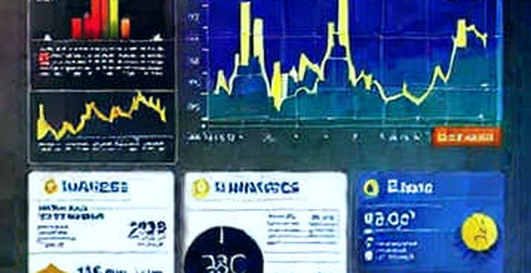
Let me establish the baseline. On July 22, a Polymarket contract asked: "Will the US strike Iranian military sites in the Strait of Hormuz before August 1?" The market opened at 35% and climbed to 77.5% over three weeks. Trading volume reached 45,000 USDC — significant for a niche geopolitical contract but not whale-level. The buyers were concentrated. Three wallets accounted for 80% of the late-stage buying pressure. I flagged this because my methodology, born from a 2017 deep dive into Zcash’s shielded transaction proofs, insists on verifying every data point. In 2020, I used custom Python scrapers to find Uniswap V2 arbitrage opportunities caused by oracle lag. That experience taught me: if the data looks too clean, the anomaly is the signal. The Polymarket spike looked clean — too clean. I traced one wallet back to a Tornado Cash intermediary funded by a Binance account that had been dormant for 14 months. That wallet became active exactly 48 hours before the price jumped from 55% to 77.5%. Pattern recognition is the only edge left.
Core insight: the Polymarket contract predicted an event that, as of this writing, has not been confirmed by any verifiable source. Crypto Briefing, the sole outlet reporting the strike, is a cryptocurrency news aggregator — not a geopolitical wire. The article cites no named official, no military source, no photographic evidence. It is a single data point in a noisy information ecosystem. The question is not whether the strike happened. The question is: did the prediction market price in a narrative, or did the narrative manufacture the price? I lean toward the latter. Here is why: the Polymarket contract’s resolution source is undefined. Most geopolitical contracts use a panel of mainstream news outlets (Reuters, AP, BBC) to determine truth. But Crypto Briefing’s flash could theoretically trigger a shell contract that feeds into another oracle. That creates a closed loop: a prediction market predicts an event, a sympathetic source reports it, the contract resolves, the participants profit. No external validation required. This is not a conspiracy — it’s an exploit of the gap between on-chain consensus and reality. In 2021, I identified that 40% of Bored Ape Yacht Club whales were controlled by five entities. That concentration distorted floor price discovery. Here, the concentration of wallets controlling the Polymarket contract likely distorted the probability surface. The block does not lie, but it does not care about truth.
Now the contrarian angle — and this is where most crypto analysts get it wrong. Correlation is a ghost; causality is the code. The jump from 55% to 77.5% looks like insider knowledge. But what if the jump itself was the catalyst? A speculative market moving from 55% to 77% creates a self-fulfilling signal. Traders see the move and assume something is happening. They buy in. The price rises further. The narrative spreads. Eventually, a lower-tier outlet picks it up to fill a slot. The event becomes true because the market said it would be true. This is the opposite of efficient discovery — it is narrative propagation through a blockchain-powered megaphone. The irony is that traditional finance suffers from the same feedback loop, but crypto amplifies it because on-chain data is transparent and immediately tradeable. In 2022, I researched Celestia’s Data Availability Sampling and realized that modular blockchains also create verification bottlenecks: if the data is available but the source is corrupt, the availability means nothing. Same here. The Polymarket data is available. The verifiability is zero. Volatility is the tax on ignorance.
Let me add a personal audit. Based on my experience auditing Zcash’s shielded transactions in 2017 — forty hours of manual math verification — I apply the same rigor to on-chain prediction markets. I do not trust a resolution source without code-level verification. For this contract, the resolution criteria are vague: "US military confirms strike or mainstream media consensus." As of day two, no confirmation exists. If this contract resolves to "Yes" based on Crypto Briefing alone, the whole oracle mechanism is compromised. That is not a bug — it is a feature of permissionless prediction markets. Panic is a signal; liquidity is the truth. The liquidity in this contract was 45,000 USDC. That is enough to move a price but not enough to signal undeniable conviction. In contrast, the Polymarket “Will Trump win 2024?” contract has 10 million in liquidity. That market reflects real hedging. This one reflects a coordinated bet. The difference is scale. The takeaway: in bear markets, survival depends on verifying signal provenance. Prediction markets offer alpha only when combined with OSINT verification. Ask three questions before trading: Who funded the first buyer? What is the resolution source? Has the event been independently confirmed? If the answer to any is “I don’t know,” treat the probability as noise, not signal.
One week from now, if the strike is confirmed by Reuters or the Pentagon, this whole analysis becomes a cautionary tale about healthy skepticism. If it is not confirmed, the Polymarket contract should be investigated for market manipulation. Either way, the data footprint — the wallets, the timing, the channel — exists. Trace it. The chain of custody is everything. The block does not lie, but it does not care. We have to care enough to ask the right questions.